
 We live in a time where a smile can be edited, pain can be filtered, and happiness can be staged.
Social media has become the world’s biggest stage a place where everyone performs, pretending that everything is fine, even when life feels like it’s falling apart.
Behind the bright selfies, glowing quotes, and vacation photos, there’s often a quiet ache the kind that never makes it to the timeline.
Welcome to the digital age of fake happiness where many wear invisible masks not to deceive others, but to survive in a world that celebrates perfection and hides pain.
1. The Pressure to Appear Perfect
Social media has silently rewritten the rules of human connection. It’s no longer enough to be happy we must look happy.
The more we scroll, the more we compare. Someone’s new house makes us feel behind. Someone’s relationship post makes us feel unloved. And so, to avoid looking like we’re losing, we post our own version of “winning.”
But that’s how the mask begins one filtered post at a time.
We don’t mean to lie; we just want to belong.
We want people to think we’re doing okay because admitting struggle online feels like exposing weakness in a world that applauds strength.
2. The Validation Trap
Likes, comments, and followers have quietly become a digital currency for self-worth.
Each notification gives a tiny rush a dopamine hit that says, “You matter. People see you.”
And when those likes stop coming, it can feel like rejection.
So, we post again. We smile harder. We exaggerate a little more. Not because we’re proud but because we’re desperate to feel seen.
Over time, this cycle creates a dangerous illusion: our worth is measured by engagement.
But true validation never comes from a screen. It comes from self-acceptance from knowing you’re valuable even when no one clicks “like.”
3. Hiding Behind Filters and Feeds
There’s a strange irony to social media: we show the world everything except our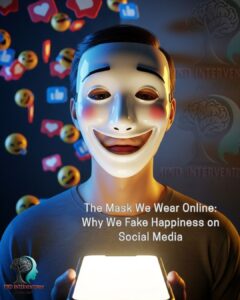 real selves.
Filters smooth our skin, captions hide our tears, and curated feeds tell a story that isn’t fully ours.
We post smiles from moments that lasted seconds but hide the hours of emptiness that followed.
We say “#blessed” even when we’re broken inside.
And yet, this digital disguise doesn’t heal pain it only deepens loneliness. Because when everyone’s pretending, no one feels truly known.
4. The Loneliness Behind the Likes
You can have thousands of followers and still feel completely unseen.
Many people scroll endlessly, surrounded by digital noise but starved for genuine connection.
Social media gives us attention, not intimacy.
We mistake visibility for value and followers for friends.
But the truth is a real conversation with one authentic person can heal more than a thousand likes ever will.
Behind every perfect post, there’s often a person craving to be understood, to be loved without filters, without performance just as they are.
5. Taking Off the Mask
So how do we begin to live more authentically online?
It starts with honesty not oversharing, but being real.
Post what inspires you, but also allow room for imperfection. Share growth, not just success.
Let people see that life is not always easy, but it’s still meaningful.
Celebrate progress over perfection. Be kind not just in comments, but in content.
And most importantly, don’t measure your life by someone else’s highlight reel.
Your story has value even in its unfiltered form.
The mask we wear online may make us look polished, but it also hides the most powerful thing about us our humanity.
It’s okay to be real. It’s okay to not have it all together.
Because authenticity, not perfection, is what truly connects hearts.
So the next time you post, ask yourself:
“Am I sharing this to be seen — or to be known?”
Take off the mask. You don’t need it.
You are enough even when no one is watching.